
The question it answers
Which AI crawlers fetched which of my pages, and did that change after a release?
What it is
cite-met classifies every visit as Human, SEO (search crawlers), AEO (AI crawlers), or Bots (noise, filtered by default), and breaks the AEO stream down by crawler: ChatGPT, Perplexity, Claude, Cohere and other AI crawlers. A per-day chart overlays deployment markers so you can tie every release to how AI crawlers respond. It records fetches. It does not show whether an answer cited you.
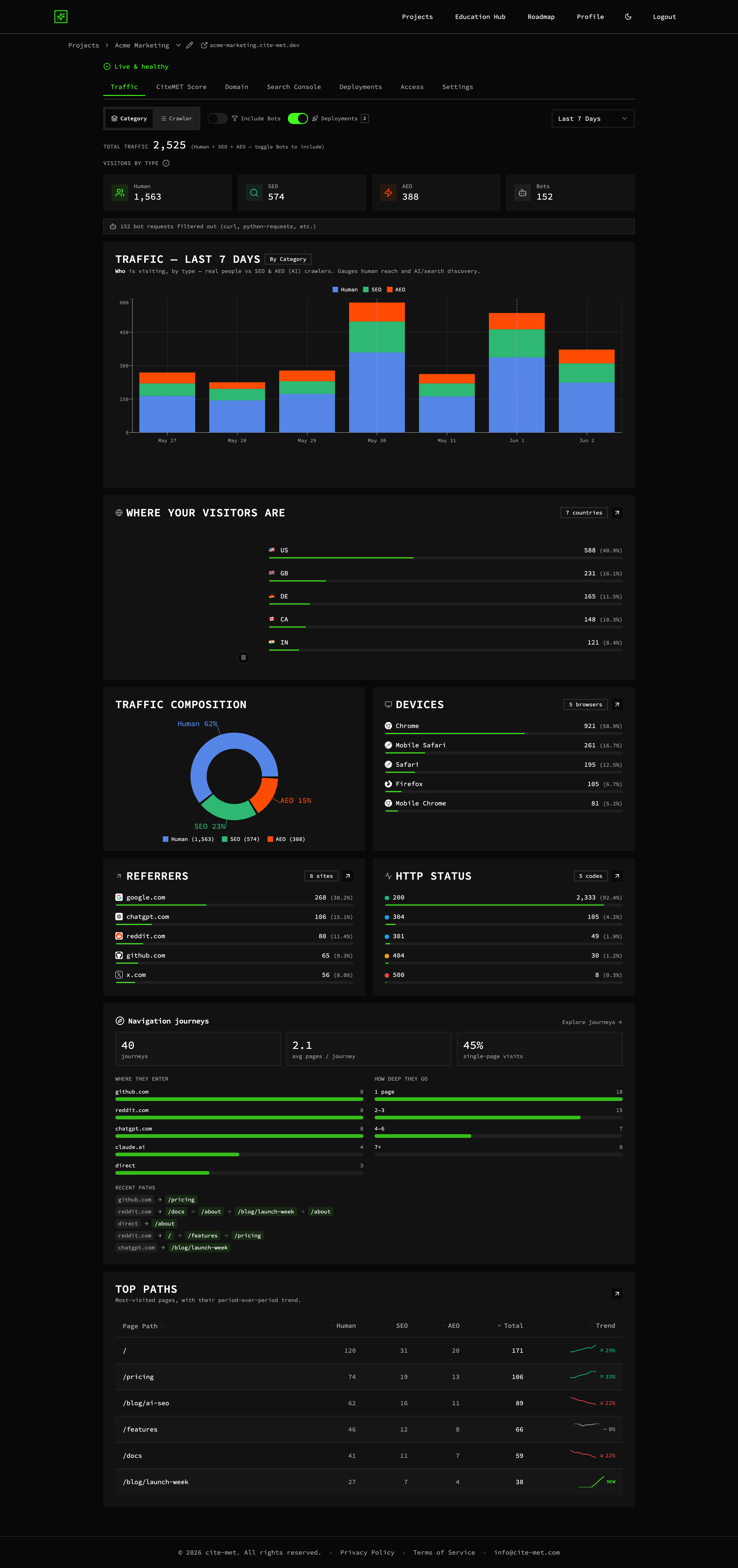
Traffic analytics with Human, SEO, and AEO visitor types charted separately (example data)
Per-crawler visibility
ChatGPT, Perplexity, Claude, Cohere and other AI crawlers, broken out.
Human / SEO / AEO / Bots
Four clean streams, with junk bot traffic filtered out by default.
Deploy markers
Tie each release to how AI crawling responds.
A concrete example
In the example project above, 2,525 visits in seven days split into 1,563 Human, 574 SEO and 388 AEO, with 152 bot requests filtered out. Switch from the Category view to the Crawler view and the AEO visits split by crawler. The chart marks the project's two deployments, so you can compare crawler activity before and after each one. This counts fetches, not citations: it shows that a crawler asked for a page, not that an answer used it. The figures are example data.
Why it matters
Google Analytics 4 leaves out known bots automatically, and most standalone counters only run in a browser, so AI crawler visits never reach their reports. Here they're a first-class column: you see which AI crawlers asked for which pages, and when. AI-crawler analytics need the site served through cite-met, because a crawler never runs a browser script. It's included on every plan, from the $300 a month Local plan.
Guides
- How Accurate Is AI Crawler Analytics? We Audited Ours
An audit of cite-met's own AI crawler and AI visit numbers: credential probes under assistant names, tracker fetches, and how to verify bots.
- How to Track ChatGPT Traffic in GA4 (and What GA4 Can't Show You)
ChatGPT visits are in GA4's AI Assistant channel; its crawlers are only in your server logs; mentions need a prompt set.
More of the platform
CiteMET Score →
A live A+ to F grade for how readable your site is to search and AI crawlers, with a list of what to fix.
AI Search Traffic Analytics →
People who arrive from AI answers, and the AI crawlers behind them, in one view.
Visitor Journeys →
Sessionized navigation paths: where visits enter, how deep they go, where they stall.