
1. AEO Analytics
See who's citing you, not just who's clicking.
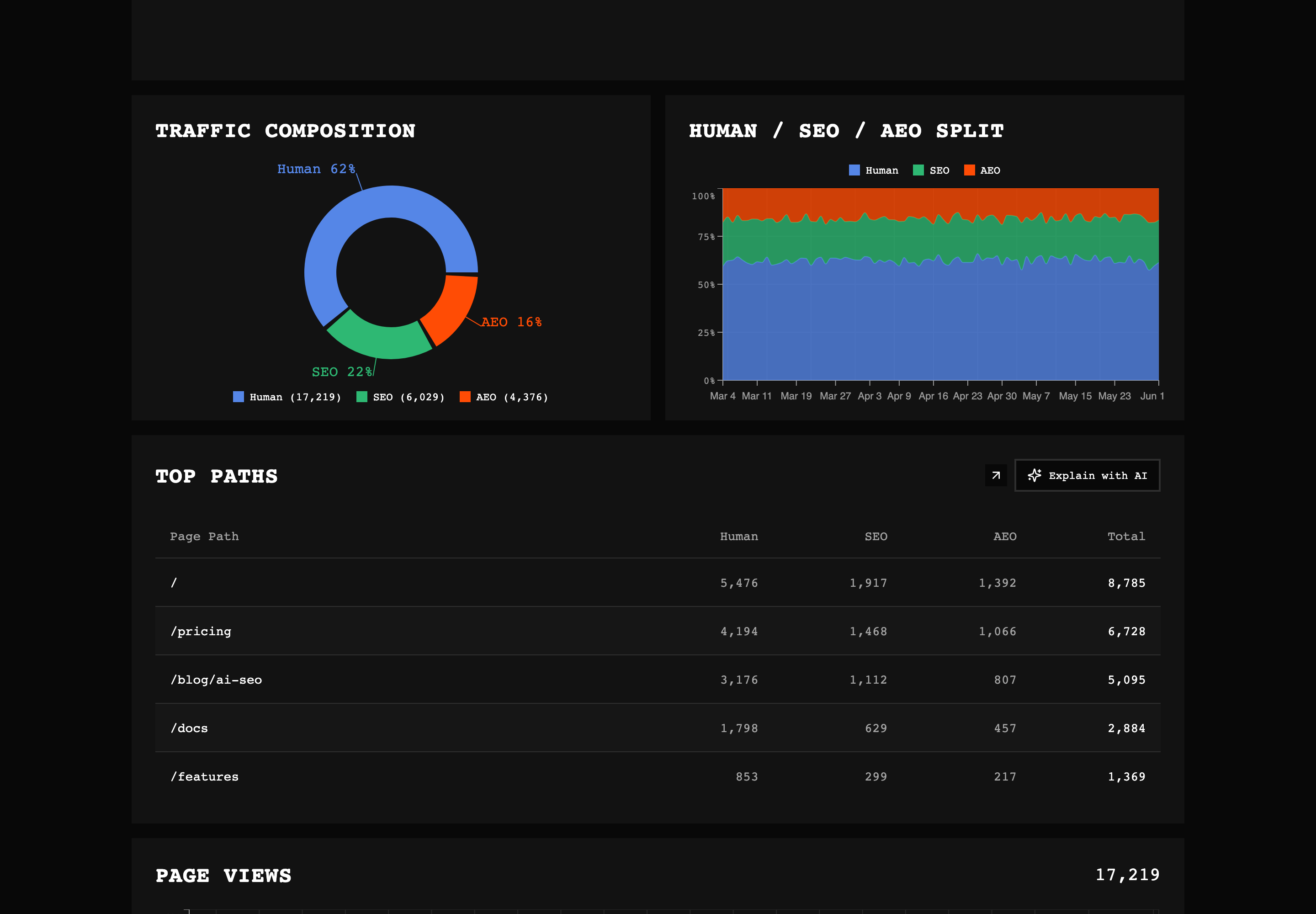
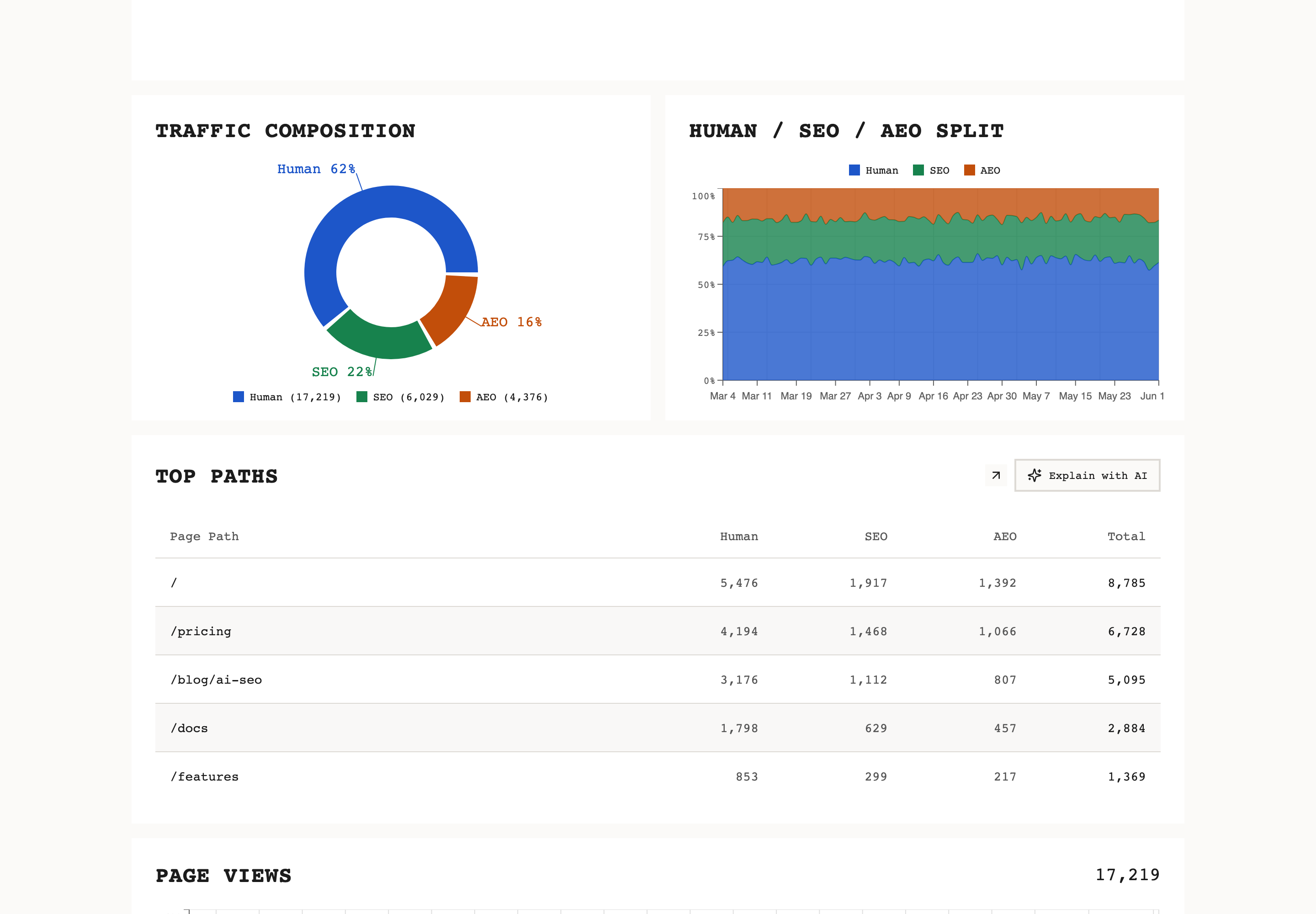
cite-met splits every request into three streams — Human, SEO, and AEO — instead of lumping bots in with people. You see which AI engines crawl which pages and how that maps to the visits that follow, so AEO becomes a number you can move, not a guess. This is the part no traffic tool gives you, and it's where the platform starts.
Human / SEO / AEO
Three traffic streams, charted apart, so AI activity is finally visible
Engine by page
See ChatGPT, Claude, and Perplexity broken out per page
Crawl → visit
Watch AI crawling line up with the human visits that follow
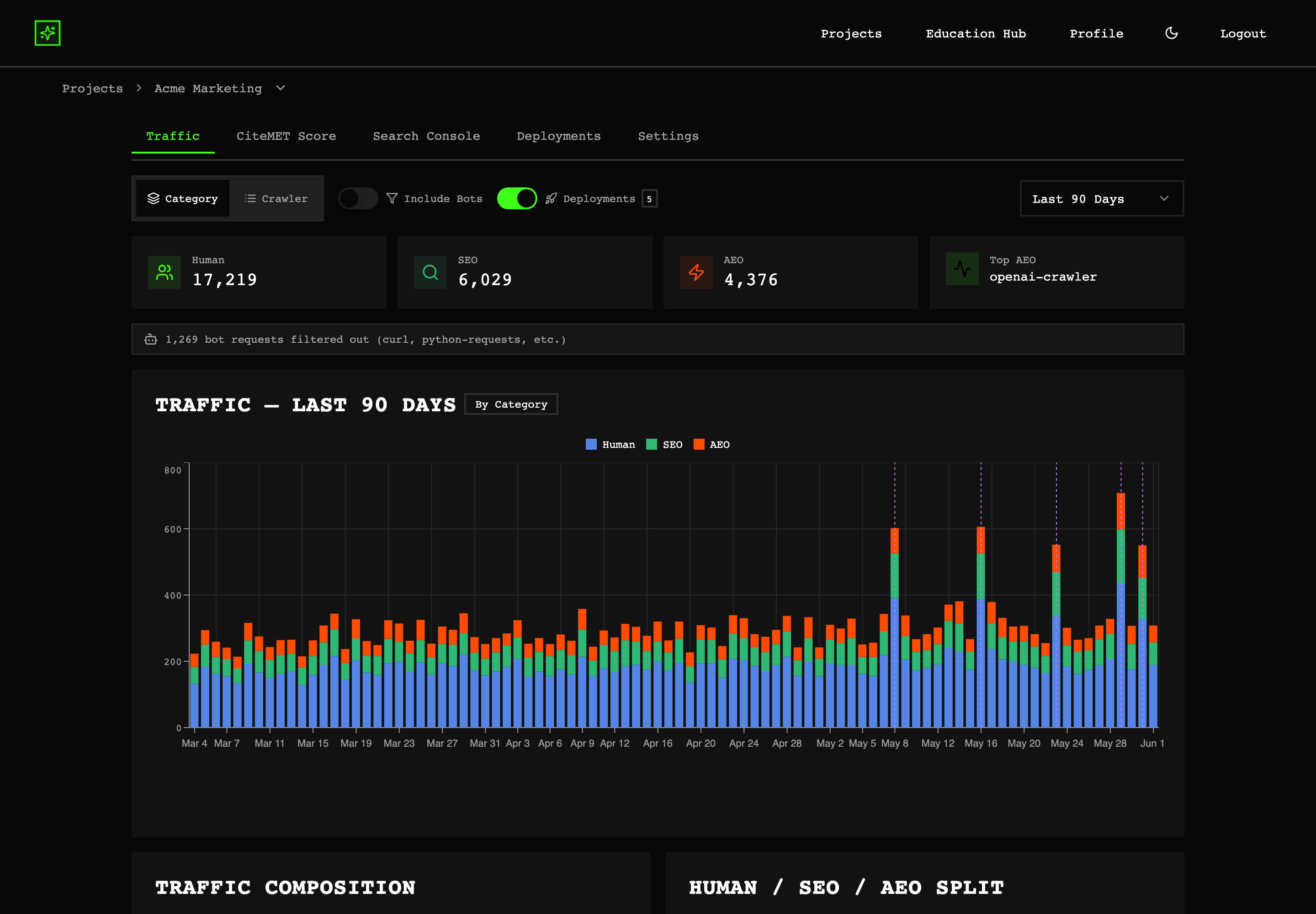
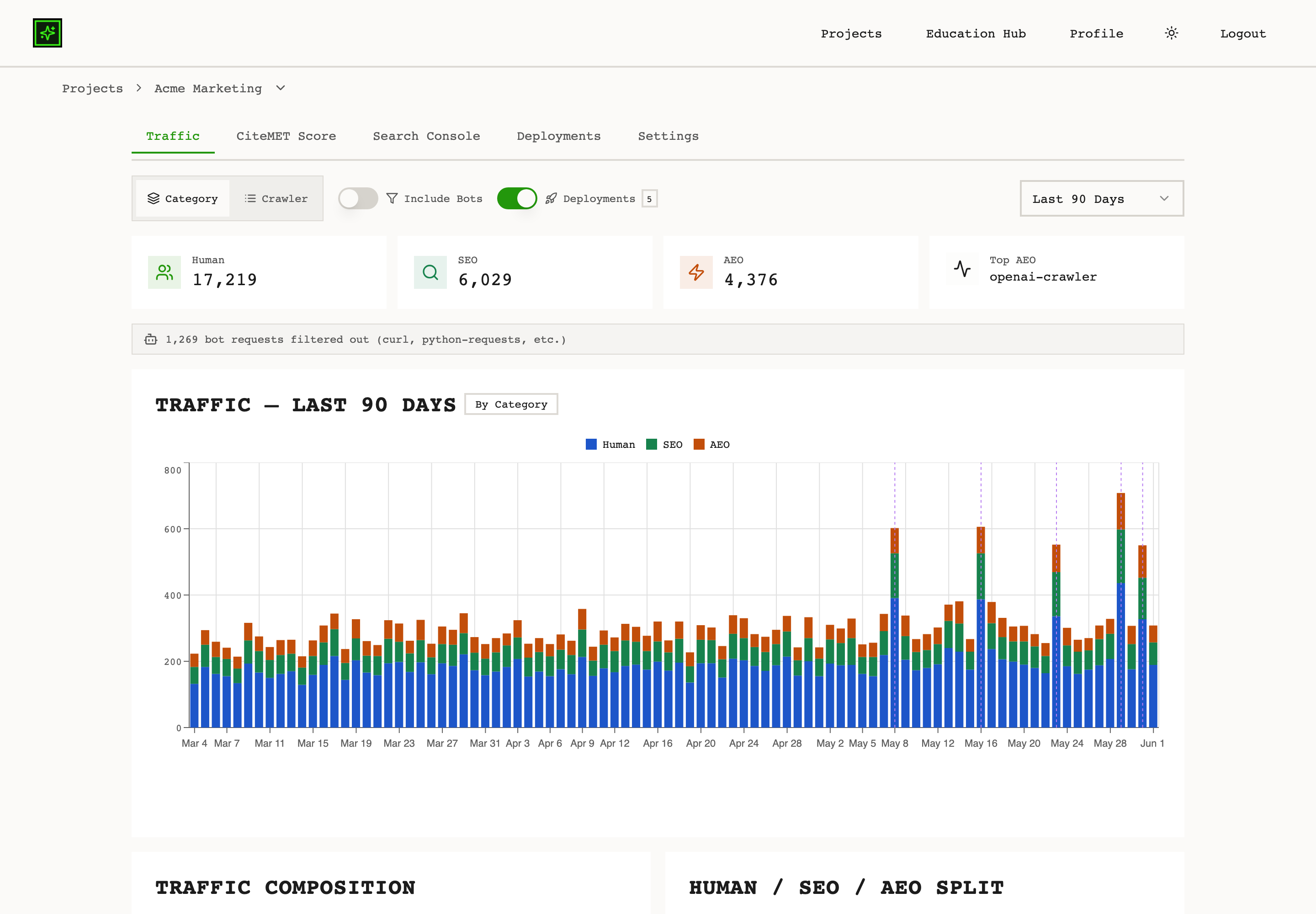
Human, SEO, and AEO traffic charted as separate streams
Which AI engines are citing which pages (demo data, illustrative)
2. Script Manager
Manage every tracking tag without a redeploy.
Add and remove third-party tags — analytics, ad pixels, A/B tools — from one dashboard. Each change takes effect on the next load, so you stop shipping a build every time marketing wants a new pixel. Your application code stays untouched in your repo, and removing a script actually removes it.
One dashboard
Every analytics and pixel tag in a single place, per project
No redeploy
Tags go live on the next load — no build, no engineering ticket
Code stays yours
Your repo is never modified; remove a tag and it's gone
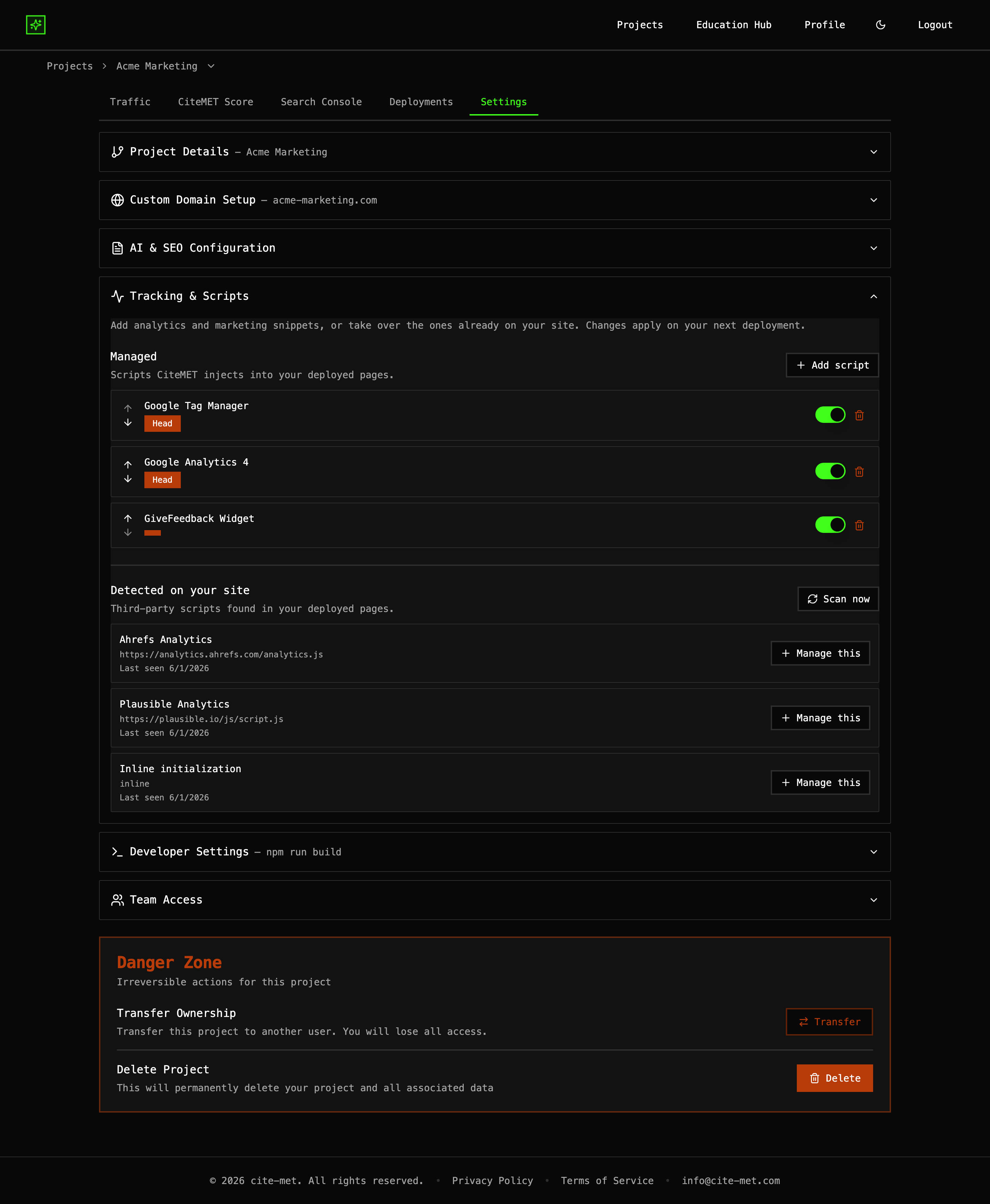
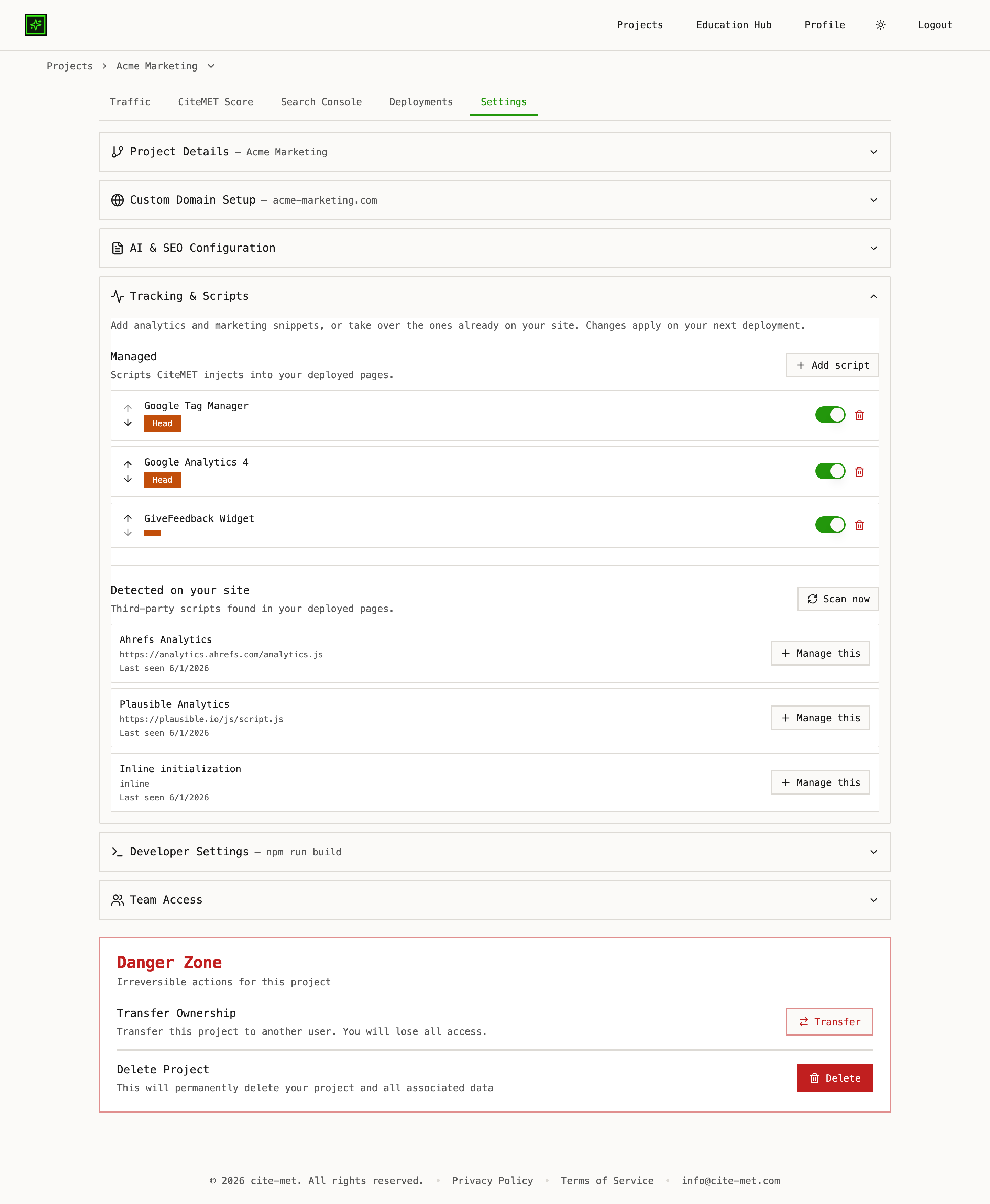
Every tracking tag managed from one place
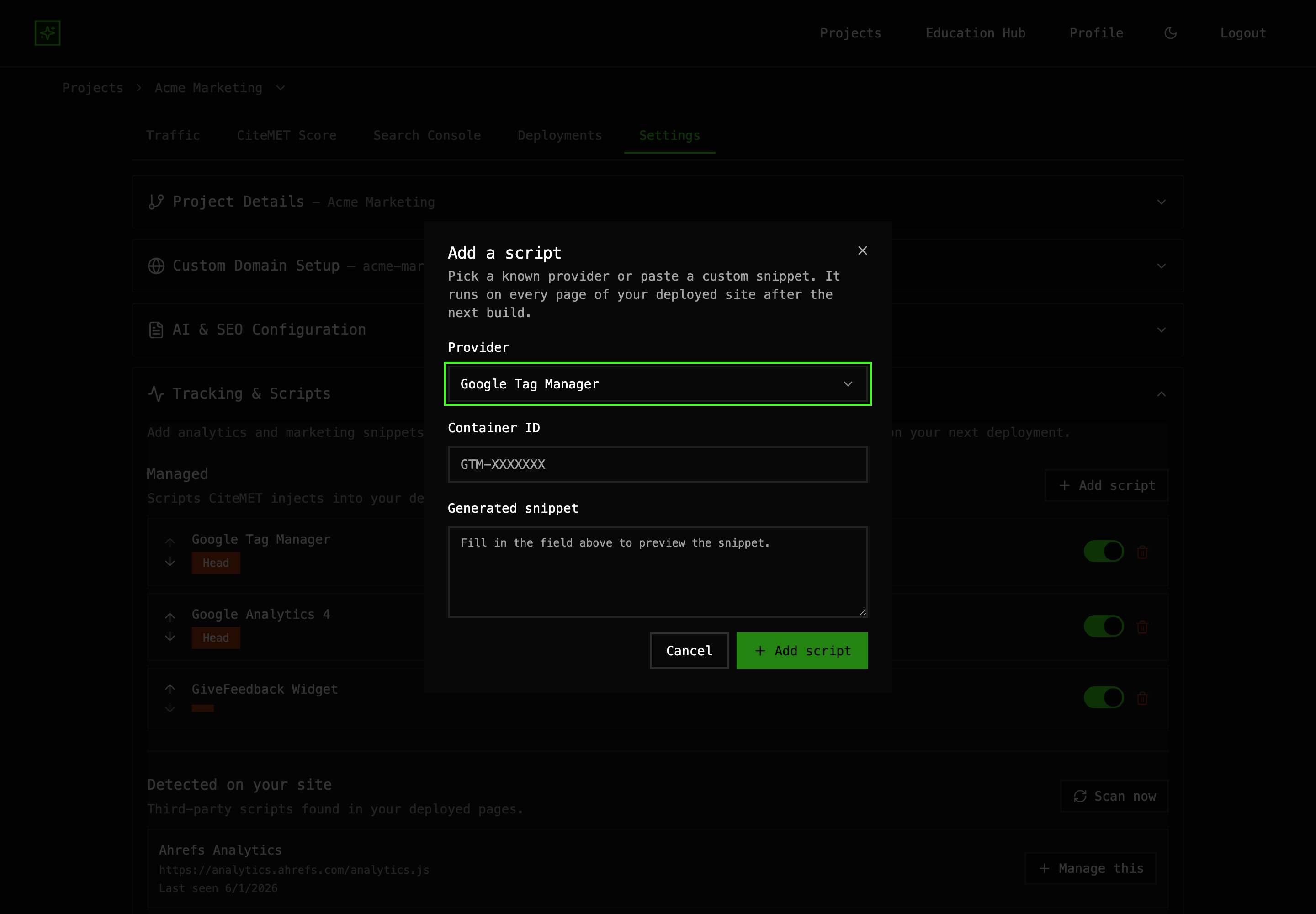
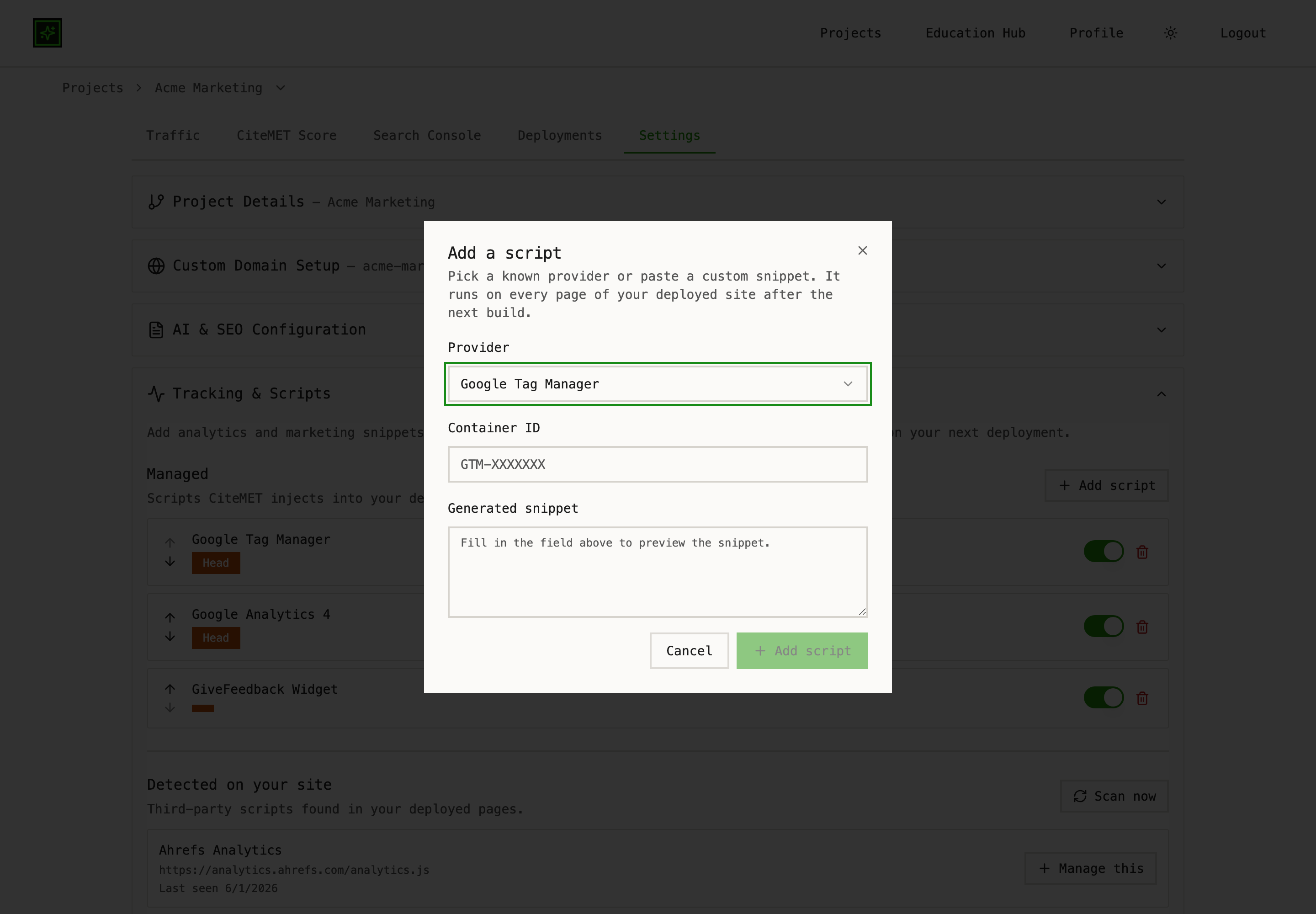
Add a new tag in seconds — it's live on the next load
3. Ship, Then Measure
Tie every change to what AI does next.
Every deploy drops a marker on your analytics chart. When citations or AEO traffic move, you can see which release caused it instead of guessing. Rewrite a page for AEO, ship it, and watch the engines respond — so optimization becomes a loop you can run on purpose.
Deploy markers
Each release is pinned to the chart at the moment it shipped
Cause and effect
Connect a specific change to the citations that followed it
A measurable loop
Edit, ship, measure, repeat — AEO you can actually iterate on
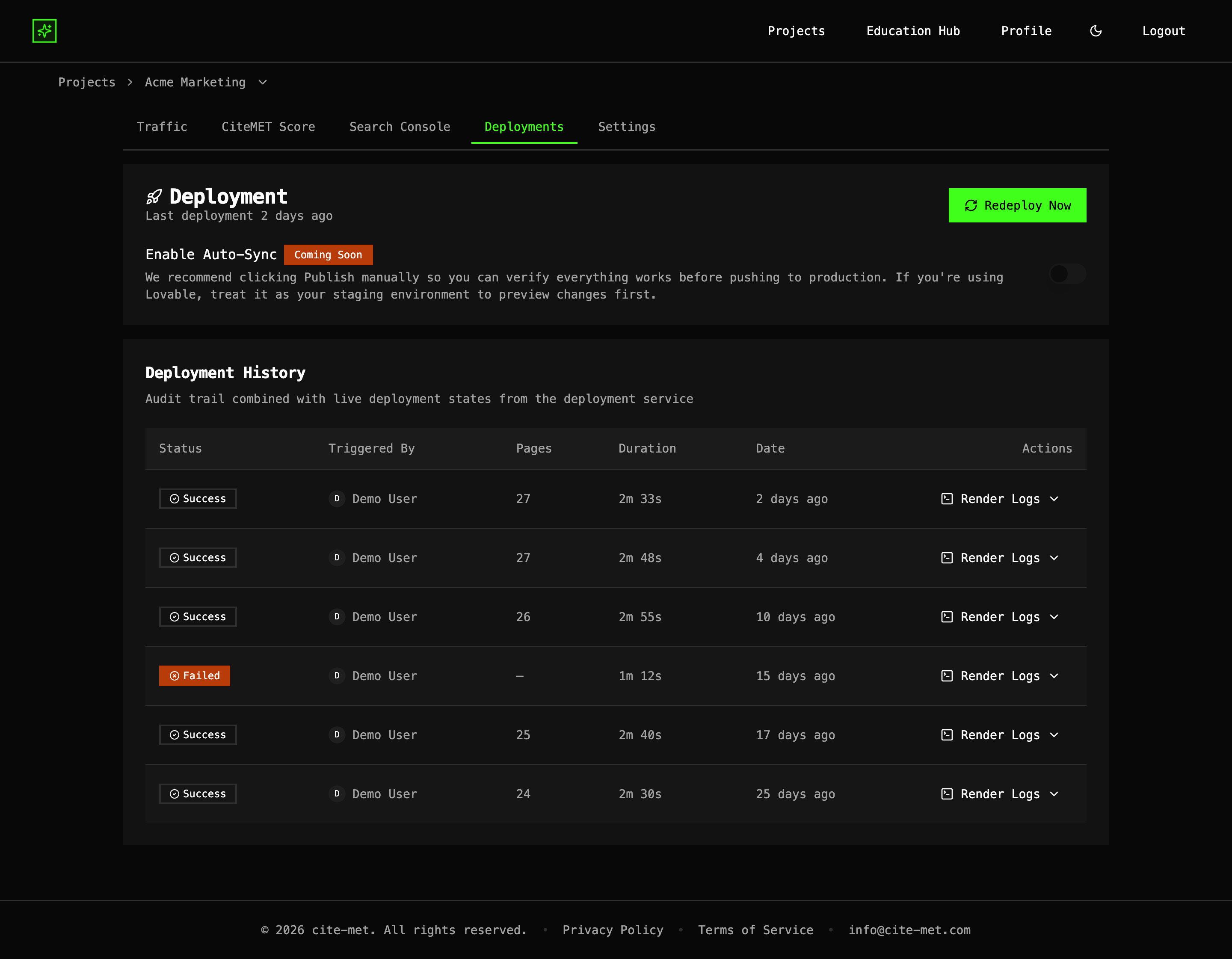
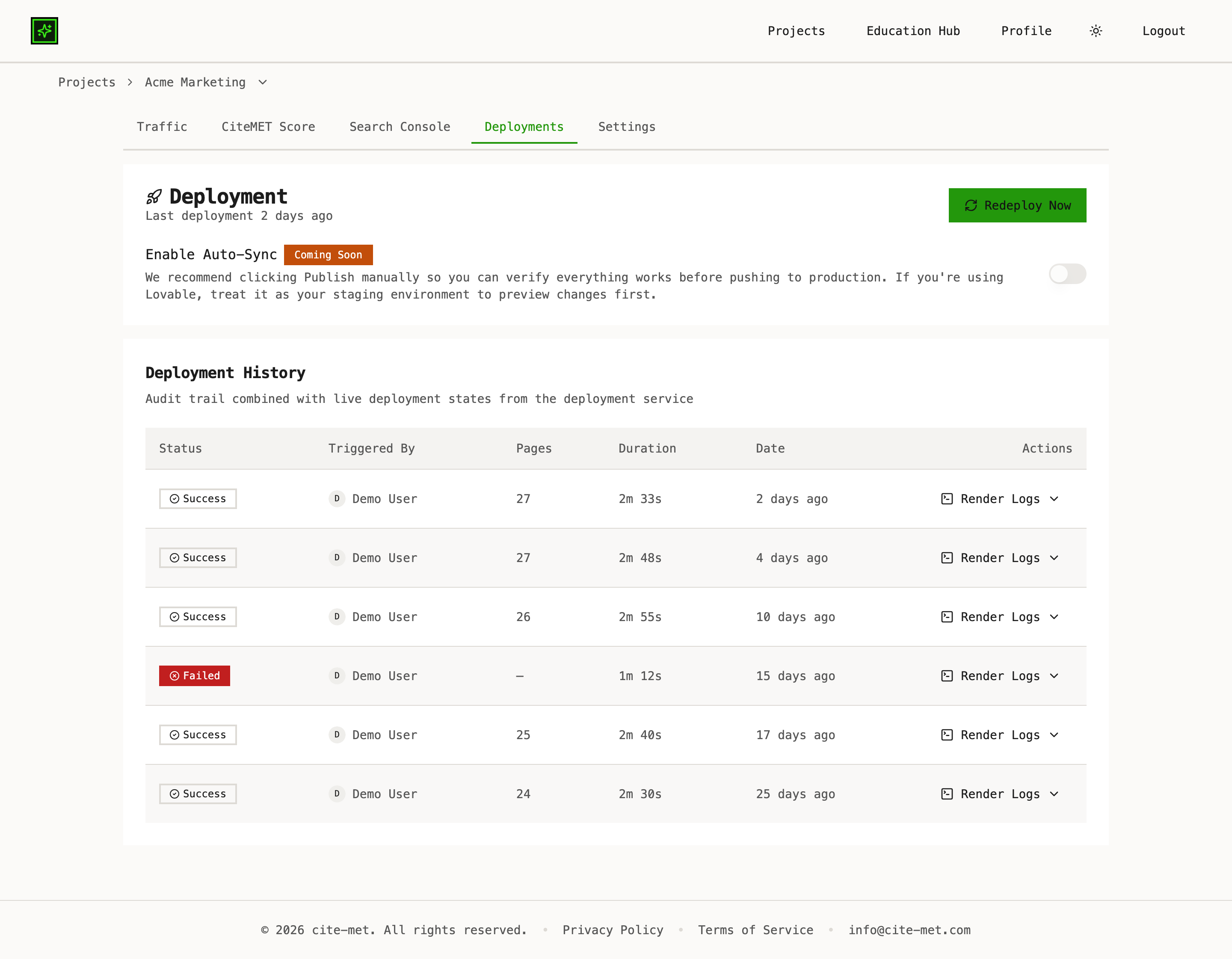
Deploys marked on the chart, so changes line up with results
4. AI-Ready Hosting
Pages built to be read by engines and people.
Deploy on cite-met and your pages ship pre-rendered, with llms.txt and sitemap.xml generated on every build. Crawlers get clean, complete HTML and a map of what matters, so the content you want cited is the content they can read — no manual file-wrangling on your side. Connect Google Search Console and your classic search data sits next to your AEO citations.
Pre-rendered HTML
Crawlers receive complete HTML, not an empty shell to execute
llms.txt + sitemap
Generated on every build, so discovery files are never stale
Search Console
Google search data alongside your AEO citations
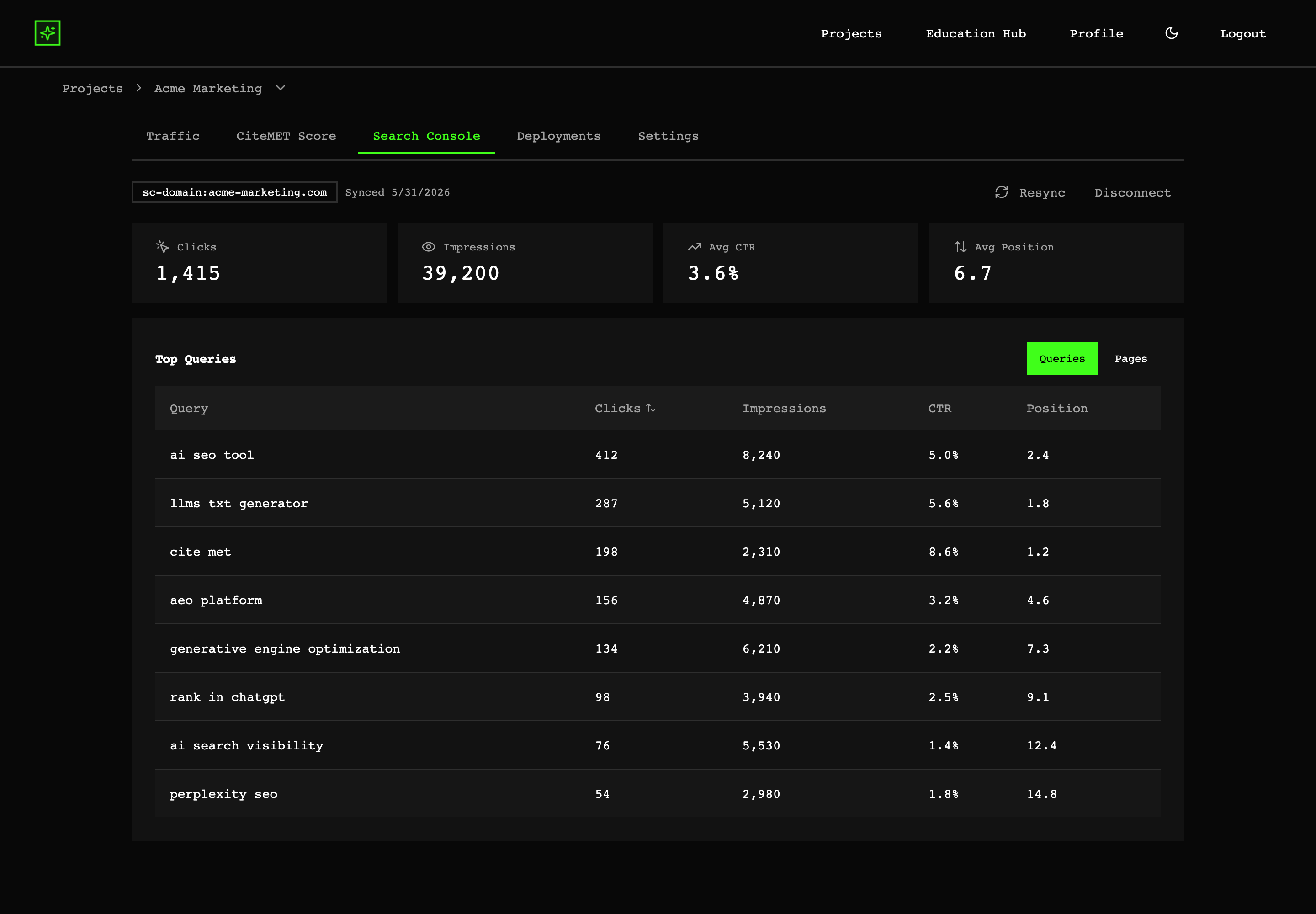
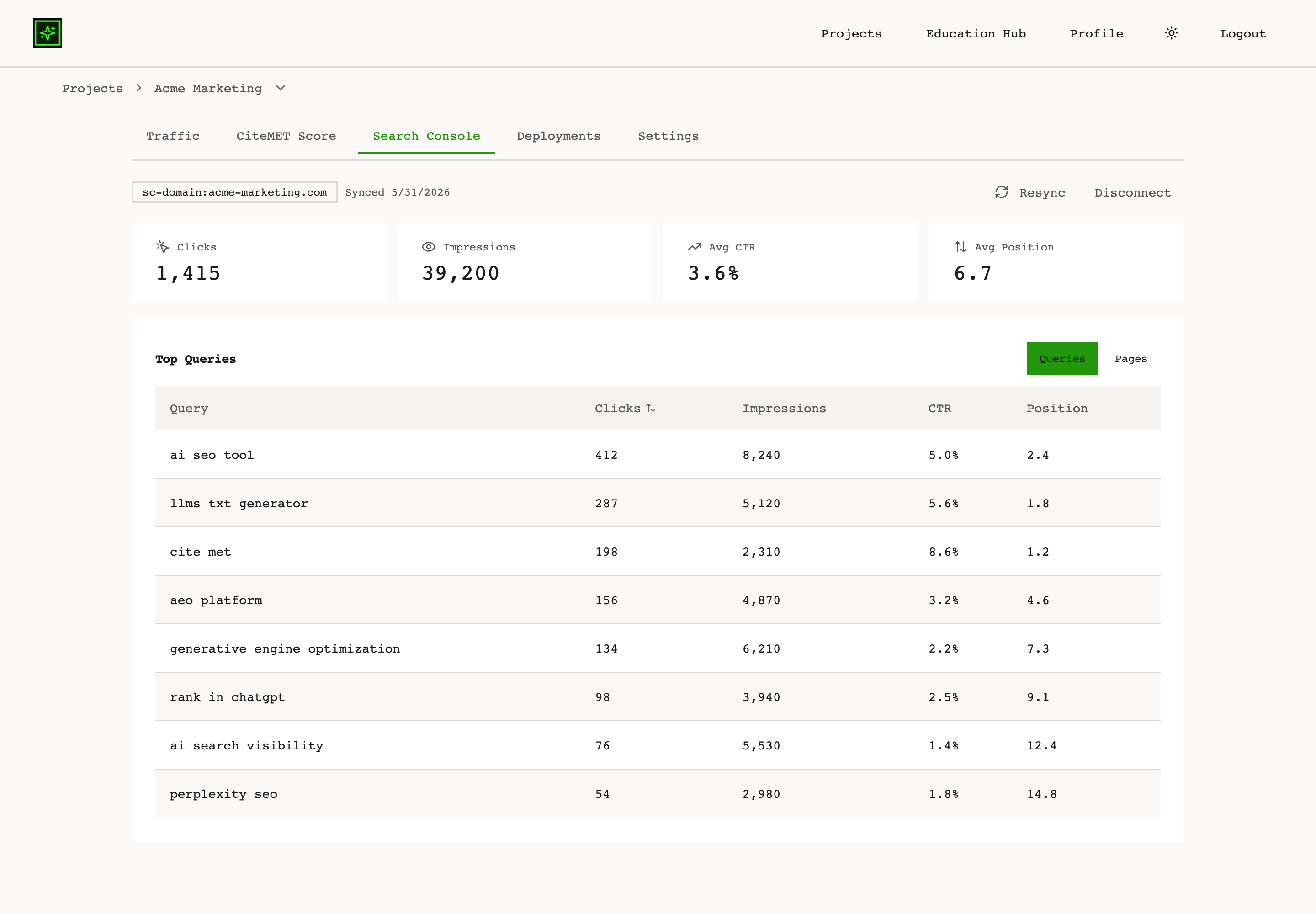
Classic search data and AEO citations, side by side
5. Portfolio Impact
Every project's visibility, in one view.
Run one site or twenty from a single dashboard. See total impact across projects, compare Human and AEO traffic at a glance, and spot which sites need attention — so agencies and multi-product teams get the whole picture without opening ten tabs.
All projects, one view
Total impact across every site you run, in one place
Human vs AEO
Compare audiences across your portfolio at a glance
Status at a glance
Spot the project that needs attention before it costs you
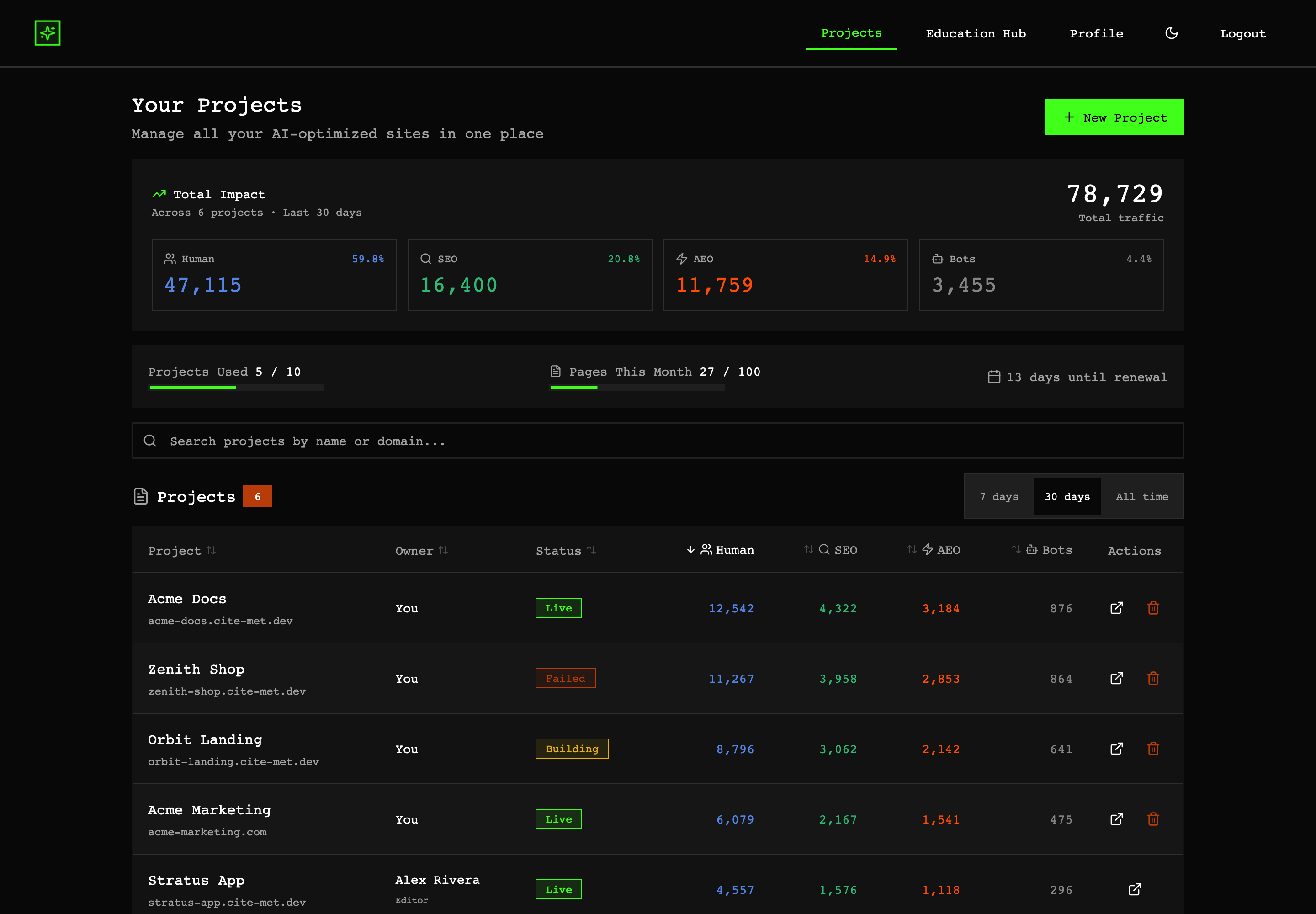
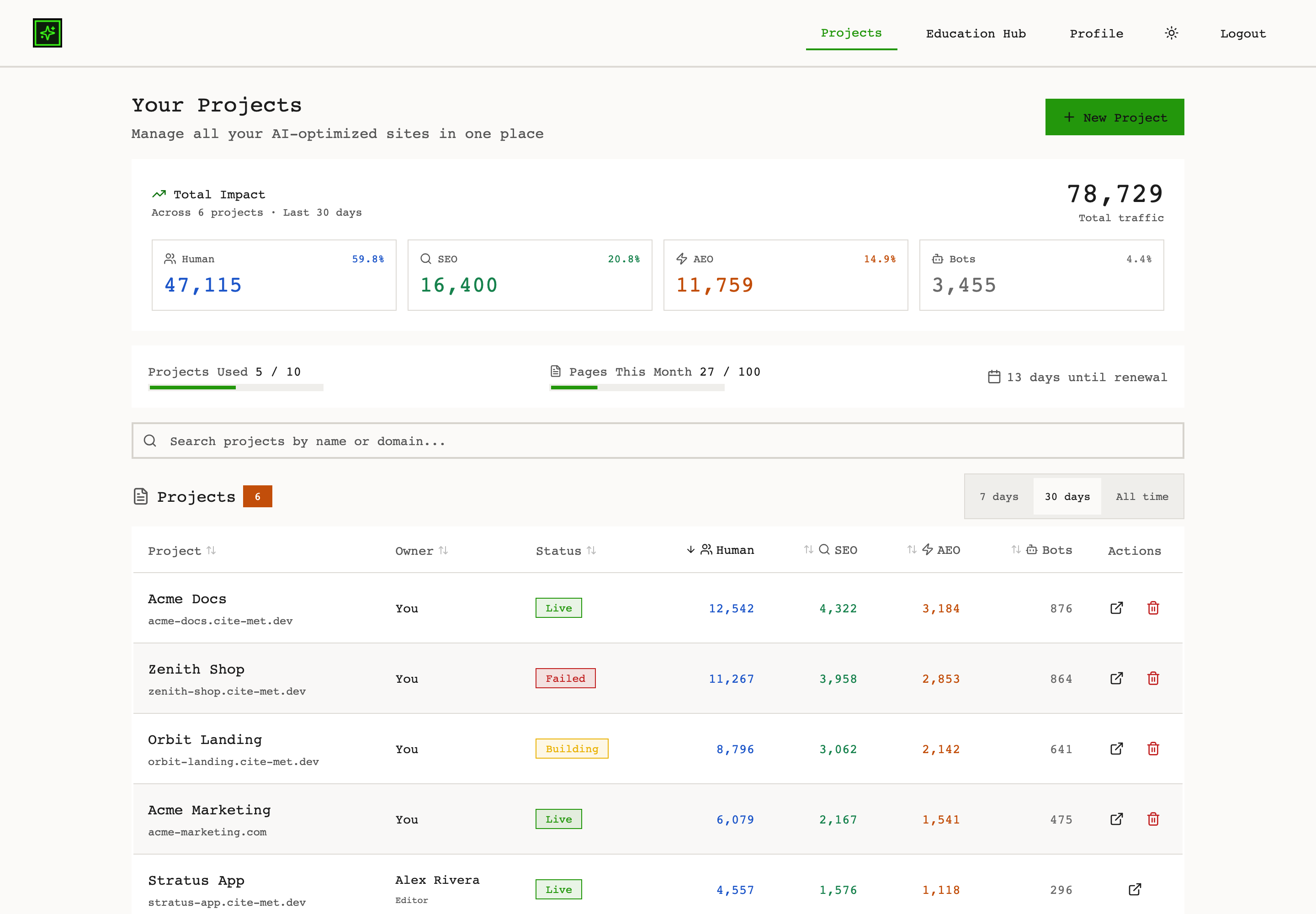
Total impact across your whole portfolio (demo data, illustrative)
6. Cite-Met Pulse
Getting found is half the job. See who shows up — and capture them.
The rest of the platform gets you cited and measures it. Pulse turns that earned traffic into named leads: it identifies the companies and people visiting your site, maps every journey they take, and captures them with built-in forms and a meeting booker — self-hosted, on data you own. It's the visitor-intelligence layer that answers “found → identified → captured → booked.” Included on the Growth and Authority plans.
Who's visiting
Every visitor resolved to a company and person — a lead list, not a session count
Full journeys
Every path from entry to outcome, so you see which content earns leads
Captured & booked
Built-in forms and a meeting booker turn identified visitors into booked calls
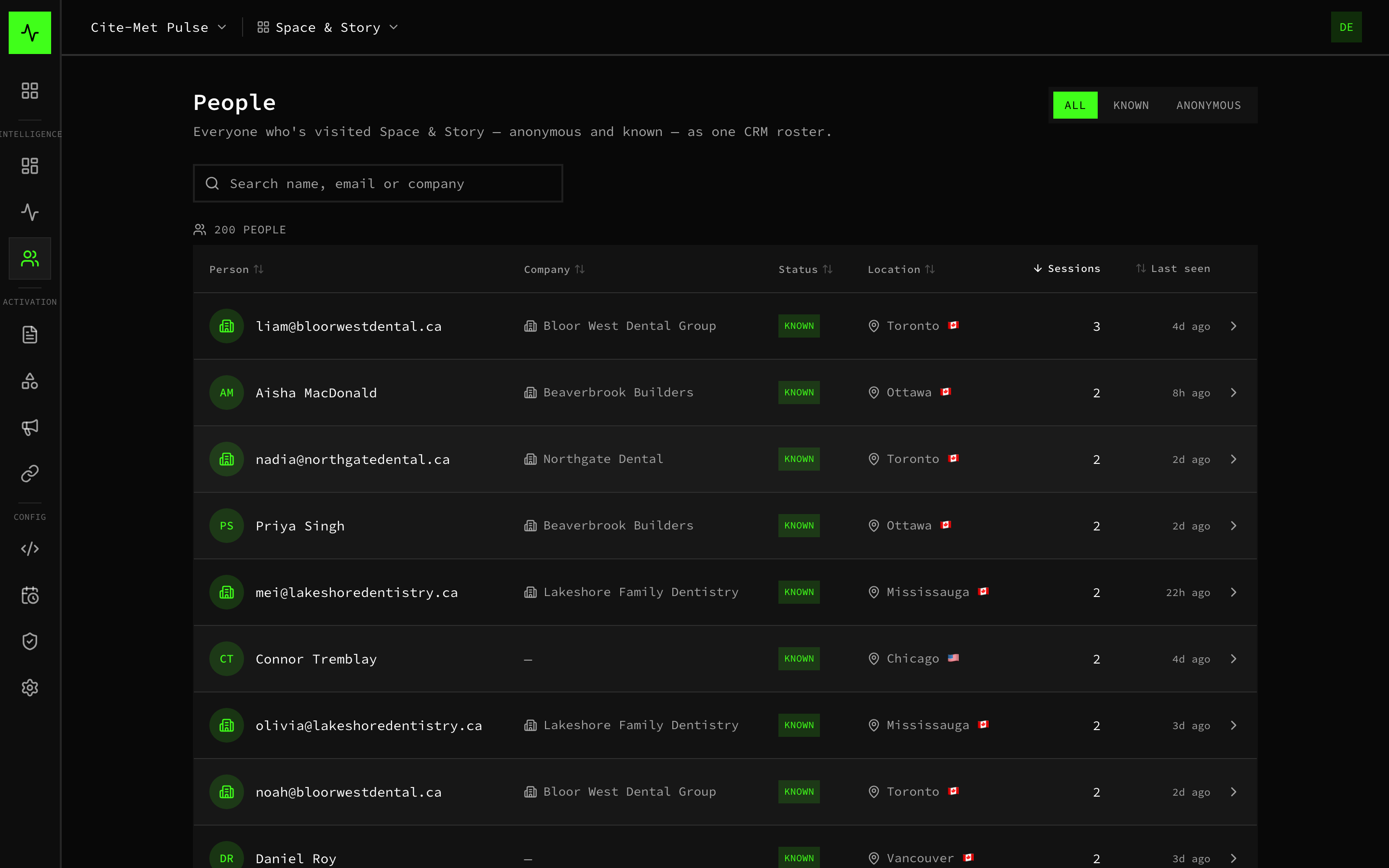
Pulse turns anonymous traffic into a named lead roster (demo data, illustrative)
Learn More About AI Optimization
Getting Started
Connect a project and start measuring your AI citations today.
Register Now →Blog: AEO Guides
Deep-dive articles on Answer Engine Optimization and the CiteMET methodology.
Read AEO Guides →Pricing Plans
Compare Care, Local, Growth, and Authority plans with a full feature breakdown.
View Pricing →All Features
Every capability across Host, Measure, and Improve — the CiteMET Score, journeys, managed DNS, site health, and more.
Browse all features →How We Compare
Privacy-first like Plausible and Fathom, honest counts unlike GA — plus AI visibility they can't measure.
See cite-met vs Plausible, Fathom & GA →